Queen Elizabeth II:
Her Life, Reign and 70-Year Legacy
Explore the remarkable Queen Elizabeth II timeline, from her childhood as Princess Elizabeth and accession to the throne to her Coronation, historic Jubilees and seven decades of service.
Seven decades at the heart of British history
Queen Elizabeth II was Britain's longest-reigning monarch, serving for more than 70 years from her accession in 1952 until her death in 2022. Her remarkable life and reign spanned some of the most significant social, political and technological changes in modern British history.
From her childhood as Princess Elizabeth and her wartime service to her Coronation in 1953, historic Jubilees and decades of public duty, this Queen Elizabeth II timeline explores the defining moments in her life and the legacy she left behind.
Born a princess who was never originally expected to become Queen, Elizabeth Alexandra Mary would eventually become one of the most recognisable figures in modern British history.
Queen Elizabeth II Timeline: From Princess to Queen
The early events that transformed Princess Elizabeth into Britain's Sovereign.
The Birth of Princess Elizabeth
Princess Elizabeth Alexandra Mary was born on 21 April 1926 at 17 Bruton Street in Mayfair, London.
She was the first child of The Duke and Duchess of York, who would later become King George VI and Queen Elizabeth.
At the time of her birth, Elizabeth was third in the line of succession and few could have predicted that she would one day become Britain's longest-reigning monarch.
A Future Queen
Elizabeth's future changed dramatically in December 1936 when her uncle, King Edward VIII, abdicated the throne.
Her father became King George VI and the ten-year-old Princess Elizabeth suddenly became heir presumptive.
From this point, her education increasingly prepared her for the constitutional and public responsibilities that could one day fall upon her.
A Princess During Wartime
The Second World War shaped much of Elizabeth's teenage years. During the Blitz, Princess Elizabeth and Princess Margaret spent much of their time at Windsor Castle.
In 1940, aged just 14, Elizabeth made her first radio broadcast during the BBC's Children's Hour, speaking to children who had been evacuated from their homes.
In 1945 she joined the Auxiliary Territorial Service, training as a driver and mechanic. She became the first female member of the Royal Family to serve as a full-time active member of the Armed Forces.
A Promise of Service
On her 21st birthday, Princess Elizabeth made a broadcast from South Africa in which she dedicated her life to the service of the people of the Commonwealth.
It was a promise that would come to define her life and reign for the next seven decades.
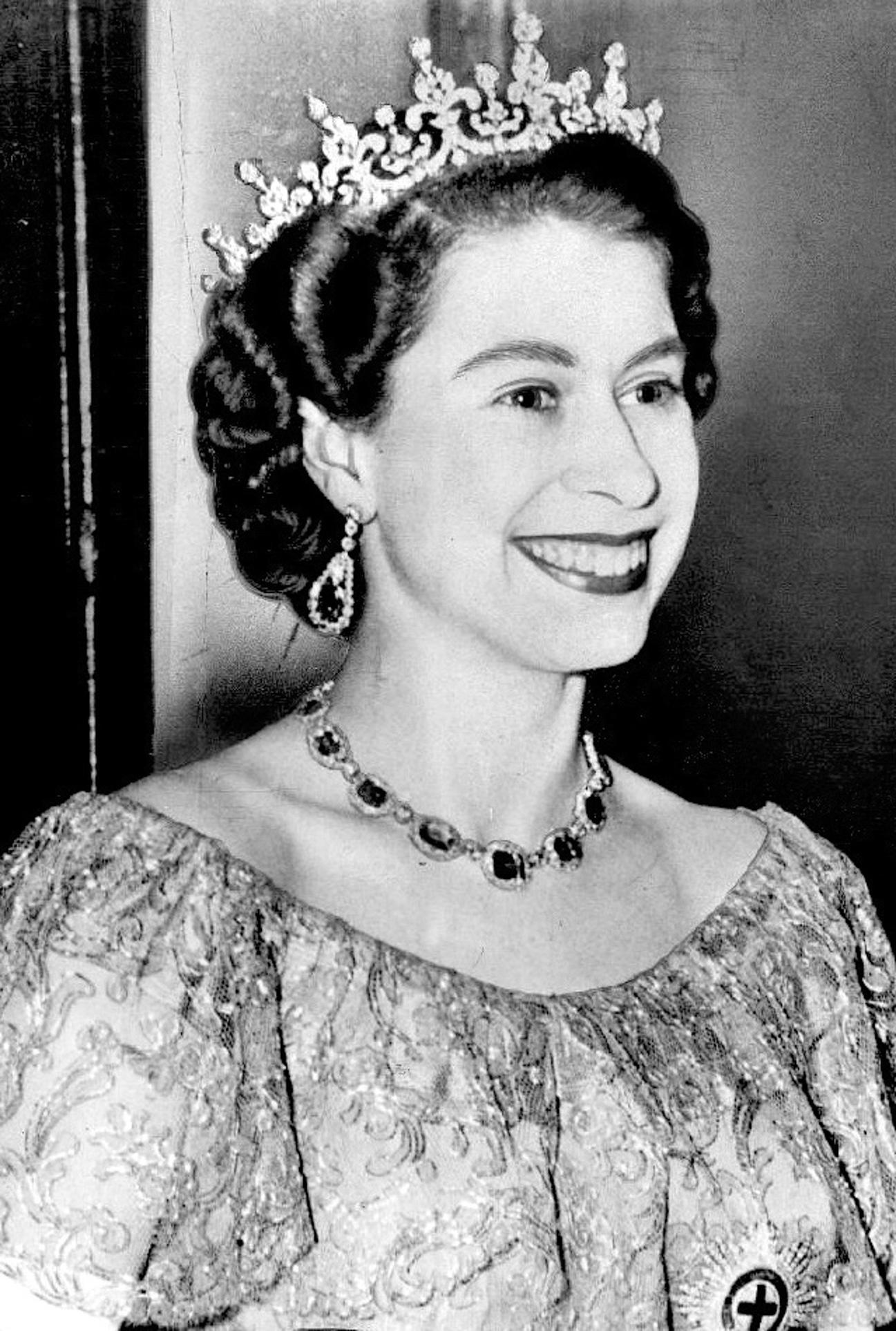
Later that year, on 20 November 1947, Princess Elizabeth married Lieutenant Philip Mountbatten at Westminster Abbey. He became The Duke of Edinburgh and would remain beside her for more than 73 years.
A Growing Royal Family
Elizabeth and Philip welcomed their first child, Prince Charles, in November 1948. Princess Anne followed in August 1950.
Elizabeth was still a young princess, wife and mother, but the declining health of King George VI meant that she and Prince Philip increasingly undertook royal engagements on his behalf.
When Queen Elizabeth II Became Queen
Queen Elizabeth II's accession took place on 6 February 1952.
Princess Elizabeth and Prince Philip were in Kenya at the beginning of a Commonwealth tour when news arrived that King George VI had died.
At just 25 years old, Princess Elizabeth became Queen Elizabeth II.
The remainder of the tour was cancelled and the new Queen returned to Britain. She had left the country as a princess. She returned as Sovereign.
The Coronation of Queen Elizabeth II
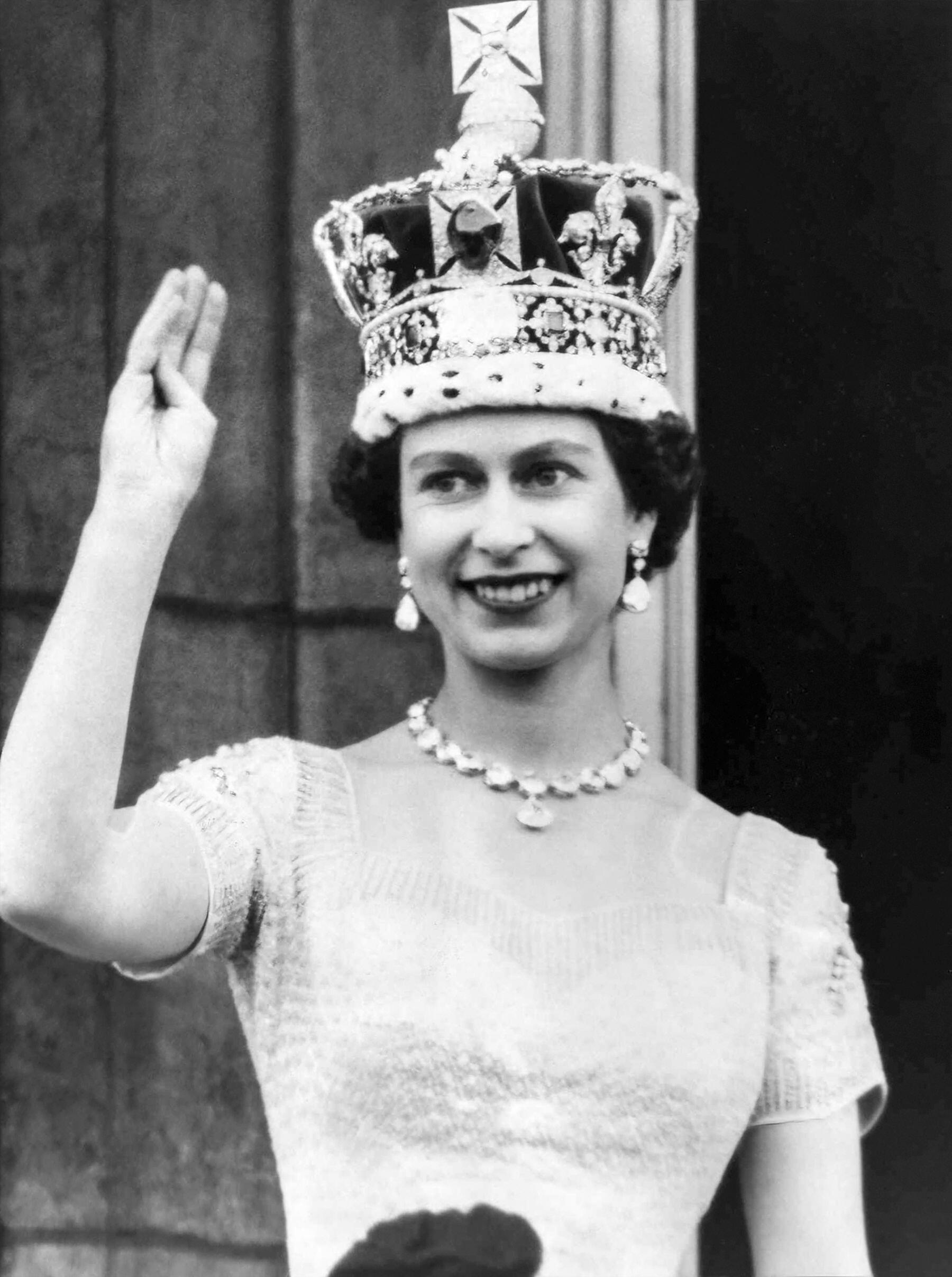
Queen Elizabeth II was crowned at Westminster Abbey on 2 June 1953.
The Coronation became one of the defining events of post-war Britain. At The Queen's request, much of the ceremony was televised, allowing millions of people to witness a Coronation from their homes.
An estimated 27 million people in Britain watched the ceremony on television, while around 11 million listened on the radio.
For many families it was one of their first major experiences of television. The occasion represented both ancient tradition and a new technological age — an appropriate beginning for a reign that would span decades of extraordinary change.
Her reign would come to be defined not by a single moment, but by a lifetime of continuity, duty and service.
The Reign of Queen Elizabeth II Through the Decades
As Britain changed, the role and public face of the monarchy evolved with it.
A New Elizabethan Era
The early years of Queen Elizabeth II's reign were filled with extensive travel.
Between November 1953 and May 1954, The Queen and The Duke of Edinburgh undertook a vast Commonwealth tour covering approximately 44,000 miles and visiting 13 countries.
It helped establish a defining feature of her reign: a visible and international monarchy centred on personal engagement with communities.
A Changing Britain
Britain changed rapidly during the 1960s as new music, fashion, technology and social attitudes transformed everyday life.
The Royal Family gradually became more visible to the public, adapting to television and changing expectations of the monarchy.
Prince Andrew was born in 1960 and Prince Edward followed in 1964, completing The Queen and Prince Philip's family of four children.
Queen Elizabeth II's Silver Jubilee
In 1977, Britain celebrated 25 years of Queen Elizabeth II's reign.
The Queen travelled extensively throughout Britain during the Jubilee year, while street parties, commemorative events and public celebrations created lasting memories for millions.
Royal Life in a New Media Age
By the 1980s, the Royal Family had become an increasingly significant focus of international media attention.
The Queen continued the less visible but central work of the monarchy: weekly meetings with Prime Ministers, receiving ambassadors, carrying out investitures and undertaking thousands of public engagements.
Her consistency became one of the defining characteristics of her reign.
The 'Annus Horribilis'
1992 became one of the most difficult years of The Queen's reign.
Several members of the Royal Family experienced marital difficulties and Windsor Castle suffered a devastating fire.
In a speech marking the 40th anniversary of her accession, The Queen famously described the year as an annus horribilis.
The period also demonstrated one of the enduring qualities of Elizabeth II's monarchy: the ability to adapt.
Queen Elizabeth II's Jubilees and Historic Milestones
From the Golden Jubilee to the Platinum Jubilee, Elizabeth II reached milestones that few British monarchs before her had ever achieved.
The Golden Jubilee
In 2002, Queen Elizabeth II celebrated 50 years on the throne.
The Golden Jubilee came during a deeply personal year, following the deaths of both Princess Margaret and Queen Elizabeth The Queen Mother.
Despite these losses, The Queen continued an extensive programme of Jubilee engagements and tours.
The Diamond Jubilee
Queen Elizabeth II's Diamond Jubilee celebrated 60 years of her reign.
Only Queen Victoria had previously celebrated such a milestone. Events included a spectacular flotilla on the River Thames, concerts, services and celebrations throughout the country.
Britain's Longest-Reigning Monarch
On 9 September 2015, Queen Elizabeth II surpassed Queen Victoria's reign of 63 years and 216 days.
She became the longest-reigning monarch in British history.
The Queen marked the occasion characteristically quietly, noting that the record was not something to which she had ever aspired.
A Nation in Uncertain Times
The COVID-19 pandemic created one of the most extraordinary periods of The Queen's later reign.
In April 2020 she delivered a rare televised address, focusing on resilience, patience and the certainty that friends and families would meet again.
The Death of Prince Philip
Prince Philip, Duke of Edinburgh, died at Windsor Castle on 9 April 2021 at the age of 99.
The couple had been married for more than 73 years. For much of The Queen's reign, Prince Philip had been her closest companion and one of the monarchy's busiest working members.
The Platinum Jubilee
In 2022, Queen Elizabeth II became the first British Monarch to celebrate a Platinum Jubilee, marking an extraordinary 70 years on the throne.
Celebrations took place throughout the United Kingdom during a special Jubilee weekend in June.
Despite increasing mobility difficulties, The Queen appeared on the balcony of Buckingham Palace during the celebrations, receiving an enormous response from the crowds below.
2022
The End of a Historic Reign
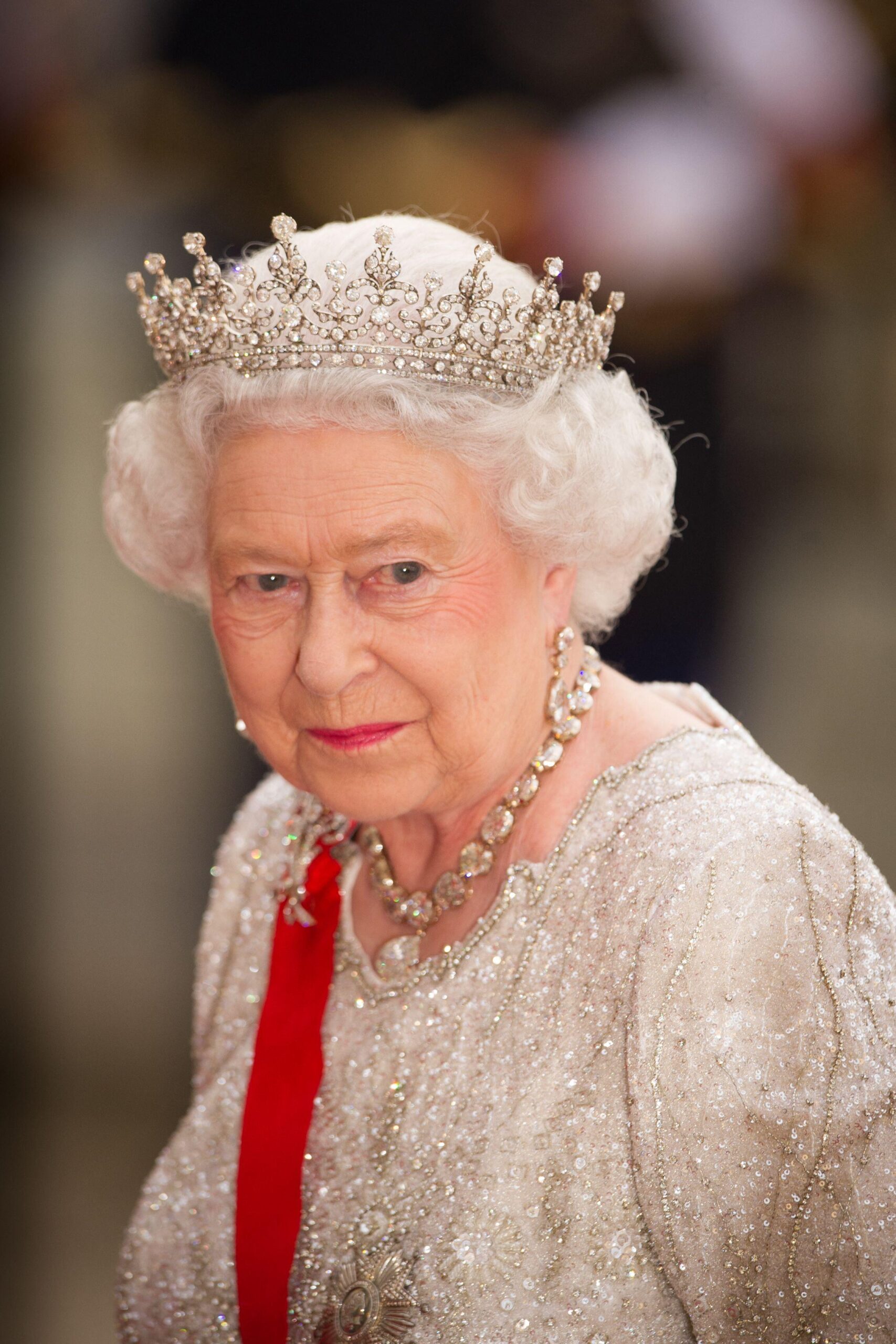
Queen Elizabeth II died peacefully at Balmoral on 8 September 2022. She was 96 years old.
Her reign had lasted more than 70 years.
Only two days earlier, she had formally appointed Liz Truss as Prime Minister — the fifteenth Prime Minister of her reign, beginning with Winston Churchill in 1952.
Her death marked the end of Britain's second Elizabethan age. Her eldest son succeeded her as King Charles III.
Queen Elizabeth II's Life Through a Changing Britain
Few individuals witnessed as much change as Queen Elizabeth II. She became Queen when Britain was still recovering from the Second World War and remained Sovereign well into the digital age.
During her lifetime she witnessed the arrival of widespread television, the Space Age, the transformation of the British Empire into the modern Commonwealth, decimalisation, personal computers, the internet and the smartphone.
Through extraordinary social, political and technological change, Elizabeth II remained one of the most familiar and enduring figures in British public life.
Queen Elizabeth II's Portraits on British Coinage
Throughout Queen Elizabeth II's reign, her portrait became one of the most familiar images in Britain, appearing on stamps, banknotes and billions of coins carried in pockets across the country and beyond.
Five definitive portraits of Queen Elizabeth II appeared on British circulating coinage during her reign, creating a remarkable visual record of the passage of time.
From Mary Gillick's youthful portrait introduced in 1953 to Jody Clark's final definitive effigy introduced in 2015, British coinage quietly documented the changing face of Britain's longest-reigning Monarch.
Today these pieces provide collectors and historians with tangible connections to different chapters of an extraordinary period in British history.
Explore Royal Collections →Queen Elizabeth II: A Lifetime of Service
Queen Elizabeth II's reign cannot be understood
through a single moment. It was shaped instead by
thousands of engagements, countless journeys, meetings
with generations of world leaders and a lifetime spent
fulfilling the constitutional responsibilities of the Crown.
From a young princess born in Mayfair in 1926 to
Britain's longest-reigning Monarch, her life became
inseparable from the history of modern Britain.